A dog’s paws are exposed to almost every surface it encounters. During a normal walk, that can include pavement, asphalt, grass, gravel, sand, wet sidewalks, snow, ice, and indoor floors. While paw pads are naturally designed for everyday movement, certain environments can place additional stress on them.
Hot pavement can become uncomfortable or potentially damaging during warm weather. Snow and ice can expose paws to cold, moisture, and rough surfaces. Mud and wet ground can also make outdoor walks messier and leave debris between the toes.
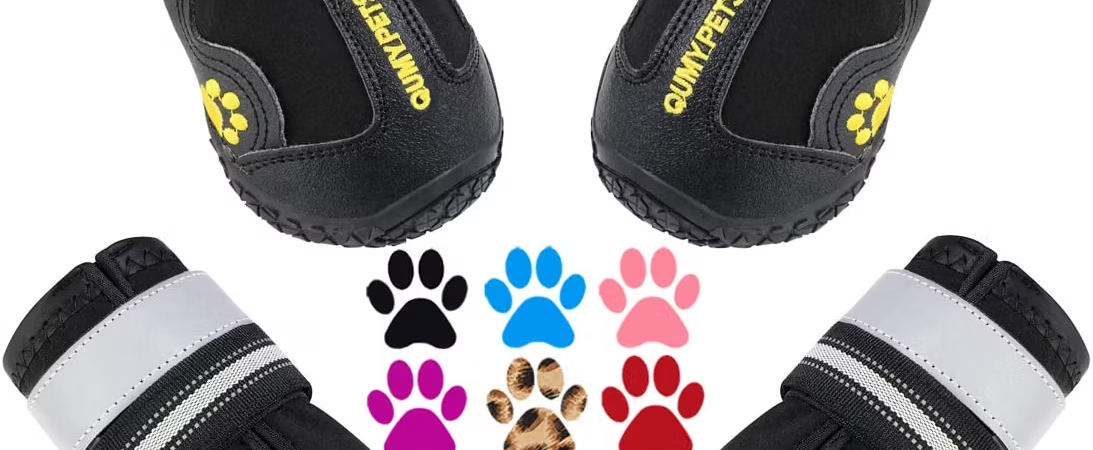
Dog boots are one way some owners choose to create an additional layer between their dog’s paws and the ground. The QUMY Dog Shoes associated with ASIN B01LYITJ4S are designed for this type of use, with a focus on outdoor paw protection across different conditions. The product is described as suitable for hot pavement, winter snow, rainy weather, outdoor walking, and indoor hard floors. It uses a rugged rubber sole, water-resistant materials, and adjustable reflective straps.
The design is intended to combine protection with a secure fit. The boots use a wide opening and two adjustable hook-and-loop straps, while the sole is designed to provide traction on various surfaces. QUMY also recommends choosing the size primarily according to paw width rather than relying only on a dog’s weight.
This guide explains how dog boots such as the QUMY model can be used, what features are important, how to measure a dog’s paws, and what limitations owners should understand before introducing footwear to a dog.
The goal is not to suggest that every dog needs shoes. Instead, it is to explain the situations where paw protection may be useful and how to approach the process safely and comfortably.
Understanding Dog Boots and Paw Protection
Dogs have naturally tough paw pads, but natural protection has limits.
The temperature and texture of a surface can make a significant difference. Asphalt that feels comfortable to a person for a short period can become much hotter during direct summer sunlight. Snow and ice can expose paws to prolonged cold and moisture. Rough terrain can contain stones, thorns, sticks, or other objects that may irritate the pads.
Dog boots create a physical barrier between the paw and the surface.
This can be useful for specific outdoor situations, but boots are not a substitute for sensible walking practices. During very hot weather, for example, walking at a cooler time of day and choosing shaded routes can still be important even when a dog is wearing boots.
Likewise, during severe cold, footwear should be combined with appropriate attention to the dog’s overall body temperature and environmental exposure.
The QUMY design is intended to provide an additional layer of protection while allowing the dog to walk normally.
Key Features of the QUMY Dog Shoes
Rugged Rubber Sole
One of the most important components of a dog boot is the sole.
The QUMY model uses a rugged rubber bottom designed to provide traction and a layer of separation between the paw and the ground. Product information describes the sole as flexible, durable, and skid-resistant.
This can be useful when a dog walks on surfaces that are hot, rough, wet, slippery, or covered with small pieces of debris.
The sole also provides a physical barrier against certain sharp objects such as thorns.
It is important to keep expectations realistic, however. A rubber sole can reduce direct contact with the ground, but it does not make a dog’s paws completely immune to injury. Sharp objects can still potentially penetrate footwear if enough force is applied, and damaged boots should be replaced or repaired rather than continued in use.
Water-Resistant Construction
The QUMY boots are described as water-resistant and intended for use during rainy and snowy conditions.
Water resistance can be useful for keeping paws drier when walking through wet grass, shallow puddles, rain, slush, or snow.
However, water-resistant should not automatically be interpreted as completely waterproof under every condition.
Prolonged immersion, deep puddles, heavy rain, or snow entering through the upper opening can eventually introduce moisture.
The fit around the dog’s leg also matters. If water enters from above, the sole material itself cannot prevent the interior from becoming wet.
For normal walks in wet conditions, the water-resistant construction can provide an additional layer of protection, while owners should still inspect the boots after use.
Two Adjustable Straps
The QUMY design uses two adjustable hook-and-loop straps to secure each boot. The straps also contain reflective material intended to improve visibility in low-light conditions.
A secure fastening system is particularly important for dog footwear.
If a boot is too loose, it can rotate, shift position, or come off while the dog is walking.
If it is too tight, it can create unnecessary pressure around the leg.
The goal is a secure fit without excessive compression.
Owners should check the straps periodically during the first few walks, especially while the dog is still becoming accustomed to the footwear.
Wide Split Opening
The boots feature a wide opening designed to make them easier to put onto a dog’s paw.
This can be useful because getting a paw into a narrow shoe can be difficult, particularly with dogs that are unfamiliar with footwear.
A wider opening also makes it easier to position the paw properly before securing the straps.
Even with a wide opening, patience is important. A dog may initially pull its leg away or resist having its paw handled.
Gradual introduction is usually more practical than immediately putting all four boots on and expecting the dog to walk normally.
Reflective Elements
The adjustable straps include reflective details.
Reflective material can help make the boots more noticeable when illuminated by headlights or other light sources.
This should be considered a visibility aid rather than a replacement for a leash, reflective vest, light, or other visibility equipment.
For nighttime walks, a combination of visibility tools can provide more complete awareness of the dog’s location.
Four-Boot Set
The product is supplied as a four-piece set for the dog’s four paws. Product listings identify the package as four dog shoes.
Using four boots provides consistent protection across all paws, although the exact fit should still be checked individually.
Dogs can have slightly different paw shapes and sizes between their front and rear legs. The sizing system is therefore more useful when owners measure the actual paws rather than selecting a size based only on body weight.
Hand-Wash Care
Product information specifies hand washing for care.
This is relevant for outdoor footwear because dog boots can accumulate dirt, mud, sand, grass, and other debris.
After a walk, owners can inspect the boots for trapped debris and clean them according to the manufacturer’s instructions.
Allowing them to dry properly before storage can also help maintain the materials and reduce unwanted odors.
Why Paw Protection Can Be Useful in Hot Weather
Hot pavement is one of the most common reasons dog owners consider protective footwear.
Pavement and asphalt can absorb substantial heat from sunlight. The surface temperature can therefore be significantly higher than the surrounding air temperature.
Dogs walking directly on very hot surfaces may experience discomfort or paw-pad injuries.
Dog boots create a layer between the paw and the pavement.
However, footwear should not be treated as permission to walk a dog during extreme heat.
A safer approach is to combine several measures:
- Walk during cooler parts of the day.
- Choose shaded routes where possible.
- Avoid prolonged exposure to very hot surfaces.
- Check the pavement before beginning a walk.
- Watch the dog’s behavior for signs of heat stress.
- Provide access to water.
- Use paw protection when appropriate.
Boots address paw contact with the ground, but they do not prevent the dog’s body from overheating.
This distinction is especially important during summer.
A dog wearing protective boots can still become dangerously hot if exercised for too long in high temperatures.
Using Dog Boots in Winter
Cold weather creates a different set of paw-related concerns.
Snow and ice can accumulate around a dog’s paws, while frozen surfaces can be rough or abrasive.
Road treatments and de-icing materials can also come into contact with paw pads during winter walks.
Dog boots can create a barrier between the paws and these surfaces.
The QUMY boots are marketed for winter snow and cold-weather use, with a water-resistant construction and rubber sole.
However, the boots should not be considered a complete winter protection system.
A dog’s tolerance for cold varies according to factors such as breed, size, age, coat, health, activity level, and environmental conditions.
If temperatures are extremely low, limiting exposure and returning indoors when the dog shows signs of discomfort remain important.
Snow and Ice
Snow can enter the space between a dog’s toes and freeze.
For some dogs, this can be uncomfortable and may make walking difficult.
A boot can provide a barrier around the paw and reduce direct contact with snow and ice.
After the walk, inspect the boots and the surrounding leg area.
If moisture or snow has entered the boots, remove them and dry the dog’s paws appropriately.
Salt and De-Icing Materials
Winter sidewalks may contain salt or other substances used to reduce ice.
These materials can irritate paw pads for some dogs.
Protective boots can reduce direct contact with the treated surface.
Even when boots are used, it is sensible to inspect and clean them after winter walks.
If the boots become wet or dirty inside, clean and dry them before the next use.
How the QUMY Dog Shoes Can Be Used
Everyday Outdoor Walks
The boots can be used during normal outdoor walks when additional paw protection is appropriate.
This can include routes with rough surfaces, gravel, wet pavement, or vegetation.
Not every walk requires footwear. The decision depends on the environment and the individual dog.
Some dogs may benefit from boots only during certain seasons or on specific terrain.
Hiking
Hiking can expose paws to rocks, sticks, thorns, rough trails, and uneven terrain.
Protective footwear can provide an additional physical layer.
The rugged sole may also provide traction on some surfaces.
However, hikers should inspect the boots during longer outings.
A strap can loosen, debris can enter, or a boot can become damaged.
A quick check during breaks can help identify problems before they become uncomfortable for the dog.
Rainy Walks
Water-resistant boots can be useful during wet walks.
They can reduce direct contact between the paw and wet ground while also making post-walk cleanup easier in some circumstances.
The boots should still be dried after use.
Do not store wet footwear in a closed bag for extended periods.
Snowy Walks
Winter walks can expose paws to snow, ice, and cold surfaces.
The QUMY boots are designed with winter use in mind and are marketed as dog snow boots.
They can be used as part of a broader cold-weather walking routine.
Owners should continue monitoring the dog for signs of cold stress and avoid unnecessarily long exposure in severe conditions.
Indoor Hard Floors
Some dogs have difficulty maintaining traction on smooth indoor flooring.
The QUMY product is also described as suitable for indoor hard floors and includes a skid-resistant sole.
This can be relevant in homes with tile, hardwood, or other smooth surfaces.
However, indoor use requires particular attention to fit.
A boot that feels acceptable outdoors may feel unusual on a smooth indoor floor.
Dogs should be introduced gradually and observed carefully.
Muddy Ground
Muddy walks can leave paws dirty and wet.
Boots can create a barrier between the paw and muddy ground, potentially reducing the amount of cleaning required afterward.
The boots themselves will still become dirty.
Cleaning them after use is therefore part of maintaining them.
How to Measure a Dog’s Paw Correctly
Sizing is one of the most important parts of choosing dog footwear.
QUMY specifically recommends measuring paw width rather than relying primarily on body weight.
This matters because two dogs with similar body weights can have very different paw shapes.
Step 1: Place the Paw on Paper
Place the dog’s paw on a sheet of paper.
Press gently from above so the paw spreads naturally in a way that resembles its shape while standing or walking.
QUMY recommends this approach when measuring.
Step 2: Mark the Widest Points
Mark the left and right edges of the widest portion of the paw.
The goal is to measure the paw rather than the surrounding fur.
Step 3: Measure the Width
Measure the distance between the marks.
Compare this measurement with the manufacturer’s size chart.
QUMY states that paw width should be the primary sizing consideration, with weight used only as an additional reference.
Available Sizes
The QUMY size chart lists eight sizes for this product family, with dimensions ranging from approximately 1.7 × 2.2 inches to 3.0 × 3.3 inches, depending on the selected size.
The manufacturer’s chart gives the following approximate ranges:
| Size | Paw Width | Paw Length |
|---|---|---|
| 1 | 1.7 in | 2.2 in |
| 2 | 1.8 in | 2.4 in |
| 3 | 2.0 in | 2.5 in |
| 4 | 2.2 in | 2.6 in |
| 5 | 2.4 in | 2.8 in |
| 6 | 2.6 in | 3.0 in |
| 7 | 2.8 in | 3.2 in |
| 8 | 3.0 in | 3.3 in |
These dimensions should be checked against the current manufacturer’s sizing information before ordering because product specifications can change.
Helping a Dog Adjust to Wearing Boots
A dog may initially find footwear strange.
Some dogs lift their legs unusually high, walk stiffly, or try to remove the boots.
This does not necessarily mean the boots are unsuitable. It may simply mean the dog needs time to understand the new sensation.
Start Slowly
Begin indoors in a calm environment.
Put one boot on and allow the dog to stand for a short period.
Reward calm behavior with praise or a small treat if appropriate.
Once the dog becomes more comfortable, gradually increase the amount of time spent wearing the boot.
Introduce All Four Gradually
Once the dog is comfortable with one boot, introduce additional boots.
There is no requirement to immediately begin with a long outdoor walk.
Short practice sessions can make the transition easier.
Watch the Dog’s Movement
Look for changes in gait.
The dog should be able to walk naturally without obvious discomfort.
If the dog repeatedly bites at a boot, limps, refuses to walk, or shows signs of irritation, remove the footwear and inspect the fit.
A poor fit can create more problems than the environmental hazard the boots were intended to address.
Who the QUMY Dog Shoes May Be Suitable For
Dogs Frequently Walking on Hot Pavement
Owners who live in areas with hot summer sidewalks may consider protective footwear when outdoor walking conditions make paw protection useful.
The boots should be combined with sensible timing and route selection.
Dogs Living in Cold or Snowy Regions
Winter snow and ice can create conditions where paw protection becomes useful.
The water-resistant construction and rubber sole are intended for cold and wet environments.
Dogs Hiking Outdoors
Dogs accompanying their owners on hiking trips may encounter rough surfaces and vegetation.
Boots can add a layer between paws and some of those hazards.
Dogs That Need Additional Indoor Traction
Dogs walking on smooth indoor floors may sometimes benefit from footwear designed with a skid-resistant sole.
This can be particularly relevant when the environment is difficult for the dog to navigate comfortably.
Owners Looking for Multi-Season Paw Protection
One practical aspect of the design is its broad intended use.
The product is marketed for hot pavement, winter conditions, rain, outdoor walking, and indoor hard floors.
That can make the same set useful across different seasons rather than requiring separate footwear for every type of walk.
Important Things to Consider
The Correct Fit Matters More Than the Dog’s Weight
Weight-based sizing alone can be misleading.
A heavier dog may have relatively narrow paws, while another dog with a similar weight may have wider paws.
Use actual paw measurements whenever possible.
QUMY’s own sizing guidance emphasizes paw width.
Do Not Tighten the Straps Excessively
The straps should hold the boot securely without creating unnecessary pressure.
After putting the boot on, check that it remains stable while allowing normal movement.
If there are visible pressure marks, swelling, irritation, or persistent discomfort, remove the boots.
Inspect the Paws After Initial Use
During the first several walks, inspect the dog’s paws and lower legs after removing the boots.
Look for:
- Redness
- Hair caught in the fastening
- Abrasion
- Swelling
- Moisture
- Debris
- Signs of unusual sensitivity
If irritation occurs, stop using the boots until the cause is understood.
Boots Do Not Replace Veterinary Care
If a dog already has a paw injury, infection, wound, persistent lameness, or another medical issue, footwear should not be used as a substitute for veterinary assessment.
A protective boot may have a role in some situations, but the underlying condition should be addressed appropriately.
Water-Resistant Does Not Mean Waterproof in Every Situation
The boots are described as water-resistant, but deep water and prolonged exposure can still allow moisture inside.
Do not assume that the dog’s paws will remain completely dry under every condition.
Reflective Straps Are Not a Complete Safety System
Reflective material can improve visibility when illuminated.
For nighttime walks, however, owners should still use appropriate leashes and other visibility equipment.
Hot Weather Requires More Than Paw Protection
Boots can reduce direct paw contact with hot pavement.
They do not protect the dog from overheating.
On very hot days, exercise duration, timing, hydration, shade, and temperature should all be considered.
Check the Boots During Longer Walks
Long walks can cause straps to loosen or footwear to shift.
Periodic inspection is especially important during hiking or other activities where the dog moves over uneven terrain.
Comparing Different Types of Dog Paw Protection
Dog footwear comes in several categories, and each serves a slightly different purpose.
| Paw Protection Type | Typical Purpose | Main Consideration |
|---|---|---|
| Rugged Dog Boots | Outdoor terrain, heat, snow, wet ground | Proper fit and gradual introduction |
| Lightweight Dog Socks | Indoor traction and light protection | Less protection from rough outdoor surfaces |
| Disposable Paw Covers | Short-term protection from moisture or dirt | Usually less durable |
| Paw Wax/Balm | Moisture and surface-care support | Does not create the same physical barrier as boots |
| Waterproof Dog Boots | Wet-weather walking | Water can still enter through openings |
| Winter Dog Boots | Snow and cold-weather surfaces | Must fit comfortably with any winter conditions |
| Protective Recovery Boot | Specific paw or veterinary applications | Should be used according to professional guidance |
The QUMY boots fall primarily into the rugged multi-purpose dog boot category.
They are designed around a rubber sole, water-resistant construction, adjustable straps, and use across several outdoor conditions.
Dog Boots vs Paw Wax
Paw wax and boots work differently.
A wax or balm is applied directly to the paw pad and can provide a conditioning layer.
Boots physically separate the paw from the ground.
For hot pavement, sharp terrain, or snow, a physical barrier may offer a different type of protection than a topical product.
Some owners may use both approaches depending on the situation, but any product applied to a dog’s paws should be appropriate for pets and used according to its instructions.
Dog Boots vs Dog Socks
Dog socks are generally lighter and can be useful indoors.
They may provide traction on smooth floors and can sometimes help keep paws clean.
However, socks are typically not designed to provide the same rugged outdoor barrier as a boot with a rubber sole.
For hiking, snow, rough ground, or hot pavement, the construction of the footwear becomes more important.
Frequently Asked Questions
Are QUMY dog shoes suitable for hot pavement?
The product is specifically marketed for protecting paws from hot pavement. Its rugged sole creates a barrier between the paw and the surface.
However, owners should still avoid unnecessary exposure to extreme heat and walk during safer conditions whenever possible.
Can these dog boots be used in snow?
Yes. The product is marketed for winter snow use and cold-weather walking.
The water-resistant construction and rubber sole are intended to provide additional protection from wet and cold surfaces.
Are the QUMY boots waterproof?
They are described as water-resistant rather than as a guarantee of complete waterproof performance in every situation.
Deep water or prolonged immersion can still allow moisture to enter through the upper opening.
Do they have non-slip soles?
Yes. The rubber sole is designed to be skid-resistant and provide traction.
Actual traction depends on the surface, moisture, debris, and other environmental factors.
How many boots are included?
The product is supplied as a four-piece set.
How should I choose the size?
Measure your dog’s paw rather than relying only on weight.
QUMY recommends placing the paw on paper, pressing gently so it spreads naturally, marking the widest portion, and comparing the measurement with the manufacturer’s sizing chart.
Should I choose the size based on my dog’s breed?
Breed can provide a rough reference, but it should not replace measuring the actual paw.
Dogs of the same breed and similar weight can have different paw dimensions.
Can the straps be adjusted?
Yes. The boots use two adjustable hook-and-loop straps.
The straps should be secure without being excessively tight.
Do the boots have reflective elements?
Yes. The straps include reflective details designed to improve visibility in low-light conditions.
Reflective elements should be considered an additional visibility aid rather than complete nighttime safety equipment.
Can dogs wear these boots indoors?
The product is described as suitable for indoor hard floors as well as outdoor surfaces.
Indoor use can be relevant for dogs that need additional traction on smooth floors.
Can the boots be used for hiking?
They can be used for outdoor walking and hiking-type environments where paw protection is useful.
During longer outings, inspect the boots regularly for fit, debris, and wear.
Are the boots suitable for puppies?
Potentially, provided the selected size fits correctly and the puppy is gradually introduced to wearing them.
Puppies grow quickly, so fit should be checked regularly.
Can a dog wear the boots all day?
That depends on the activity, fit, environment, and individual dog.
Continuous wear is not automatically appropriate.
The dog’s paws and legs should be checked regularly, especially during initial use.
How do I clean the QUMY dog shoes?
The product information specifies hand washing.
Follow the manufacturer’s care instructions and allow the boots to dry properly before storing them.
What if my dog keeps trying to remove the boots?
The dog may need a gradual introduction.
Start with short sessions indoors and reward calm behavior.
If the dog continues to show strong discomfort or attempts to remove the footwear persistently, remove the boots and reassess the size and fit.
Can the boots protect against sharp objects?
The rugged sole is designed to provide protection against certain sharp outdoor hazards such as thorns.
However, no flexible dog boot should be considered puncture-proof against every object.
Can the boots prevent paw injuries completely?
No.
They can provide an additional physical barrier, but they cannot eliminate every risk associated with hot pavement, sharp terrain, snow, ice, or other environmental hazards.
Can I use them in rainy weather?
Yes. They are designed for water-resistant use and outdoor walking in wet conditions.
Inspect and dry the boots after use.
Are these boots only for large dogs?
The product family is offered in multiple sizes, with the relevant size determined primarily by paw dimensions. The available sizing extends from smaller to larger paw measurements.
Always check the current size chart for the exact variant.
Do all four paws necessarily need the same size?
Not necessarily.
Front and rear paws can differ in shape and size. Measuring each paw can provide a more accurate understanding of the fit required.
Can dog boots replace regular paw care?
No.
Dogs still need routine inspection of their paws, nails, and skin.
Boots are an environmental protection accessory rather than a replacement for normal pet care.
Conclusion
The QUMY Dog Shoes associated with ASIN B01LYITJ4S are designed to provide an additional layer of protection between a dog’s paws and a variety of indoor and outdoor surfaces.
Their combination of a rugged rubber sole, water-resistant construction, adjustable hook-and-loop straps, reflective details, and four-boot configuration makes them suitable for several situations, including hot pavement, winter snow, rainy walks, rough outdoor terrain, and some indoor hard floors.
One of the most important aspects of using dog boots successfully is getting the fit right. QUMY’s sizing guidance emphasizes measuring paw width rather than relying primarily on the dog’s body weight. A correctly fitted boot should stay secure while allowing the dog to move naturally without unnecessary pressure or rubbing.
It is also important to introduce footwear gradually. Some dogs adjust quickly, while others need several short practice sessions before they become comfortable. Owners should watch for changes in gait, repeated attempts to remove the boots, redness, or other signs of irritation.
For hot-weather walks, boots can reduce direct contact with heated pavement, but they do not prevent overheating. During winter, they can provide a barrier against snow, ice, and wet surfaces, but they do not replace appropriate cold-weather precautions.
The same principle applies to hiking and rough terrain. Dog boots can add a layer of physical protection, but they cannot make every environment safe.
Ultimately, the value of dog footwear depends on the individual dog, the surface, the weather, and the quality of the fit. Used appropriately, a pair of protective boots can become a practical part of a dog’s seasonal walking equipment, particularly for owners who regularly encounter hot pavement, snow, rain, rough trails, or slippery indoor flooring.