Spending several hours sitting in the same chair can make an otherwise comfortable workspace feel very different by the end of the day. Office workers, students, drivers, travelers, and people who spend extended periods seated may notice pressure building around the hips and lower body, particularly when a chair has a firm or relatively flat seat.
A seat cushion can provide a simple way to change the feel of an existing chair without replacing the entire chair. Instead of investing in new furniture, a person can add an additional layer of cushioning designed to distribute pressure and create a more supportive seating surface.
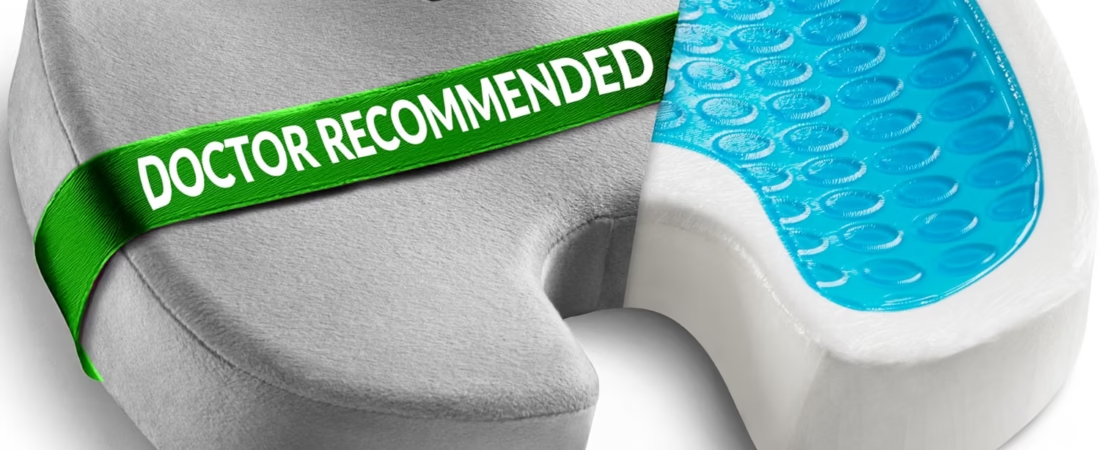
The ComfiLife Doctor Recommended Seat Cushion is designed around this concept. The cushion combines memory foam with a layer of cooling gel and uses a contoured shape intended to provide additional support while sitting. It can be used on office chairs, desk chairs, car seats, wheelchairs, dining chairs, and other compatible seating surfaces.
The product is also marketed for people looking for seating support associated with back discomfort and sciatica. It is important to distinguish between a comfort accessory and a medical treatment, however. A cushion may change pressure distribution and seating posture, but it cannot diagnose or treat an underlying medical condition.
This distinction is especially relevant when choosing a seat cushion. Comfort depends on individual body shape, chair dimensions, sitting posture, and personal preferences. What feels supportive to one person may feel too firm, too soft, too high, or otherwise unsuitable to another.
This guide explores the design of the ComfiLife cushion, how gel and memory foam work together, where a seat cushion can be useful, how to use one effectively, and what to consider before incorporating it into an office, vehicle, or home seating arrangement.
Understanding the ComfiLife Seat Cushion
The ComfiLife cushion is a portable seating accessory designed to add cushioning and contouring to an existing seat.
Its construction combines two different cushioning concepts.
Memory foam is designed to respond to body pressure and conform to the user’s shape. Gel is incorporated into the cushion to provide another layer of cushioning and is commonly associated with pressure distribution and a different surface feel from foam alone.
The cushion has a contoured design rather than being a completely flat block. Its shape is intended to provide a more structured seating surface, while the rear portion and central contour are designed to influence how the user sits on the cushion.
A removable cover makes the cushion easier to maintain than an exposed foam surface.
The underside is designed to help keep the cushion in position, which can be particularly useful when it is placed on an office chair or another smooth seat.
The portable design also means that the same cushion can potentially be moved between different locations. Someone working from home, for example, may use it on an office chair during the day and take it to another chair when needed.
Key Features
Gel and Memory Foam Construction
The combination of memory foam and gel is one of the defining characteristics of the cushion.
Memory foam can respond to body weight by compressing and conforming to the contours of the person sitting on it. This can create a different seating experience from a rigid foam or hard chair surface.
Gel provides another cushioning layer.
The purpose of combining these materials is not simply to make the cushion softer. Cushioning is also about how pressure is distributed across the seating surface.
When someone sits for an extended period, pressure is concentrated in certain areas of the body. A contoured cushion can change the way that pressure is distributed and may make a firm chair feel more accommodating.
The actual sensation depends on the user, the chair beneath the cushion, and how the person’s weight interacts with the foam.
Some people prefer a firmer seating surface, while others prefer deeper cushioning. The presence of memory foam does not mean the cushion will feel identical for every user.
Ergonomic U-Shaped Design
The cushion uses a U-shaped or coccyx-oriented contour.
The opening at the rear is intended to reduce direct pressure around the tailbone area when the user sits in the intended position.
This type of design is common among cushions marketed for coccyx support because it creates a recessed area beneath the lower central portion of the pelvis.
The practical benefit is that the user’s weight is distributed differently compared with sitting directly on a flat surface.
Positioning matters, though.
A contoured cushion can only provide its intended geometry when it is placed correctly on the chair and the user sits toward the rear of the cushion.
It should not be assumed that the U-shaped design automatically corrects posture or eliminates discomfort.
Pressure Distribution
A major reason people use seat cushions is to change pressure distribution.
A hard chair concentrates pressure against relatively small areas. Additional cushioning can increase the contact area between the body and the seating surface.
Memory foam can conform to the body, while the gel layer contributes another cushioning material.
This can be particularly relevant during extended periods of sitting.
However, pressure distribution is only one factor in seating comfort.
Chair height, desk position, back support, foot placement, and movement habits all influence the overall sitting experience.
A cushion should therefore be viewed as one part of a comfortable seating arrangement rather than the complete solution.
Non-Slip Bottom
The cushion is designed with a non-slip bottom to help reduce unwanted movement while it is being used.
This is particularly useful because a cushion that repeatedly slides backward or forward can become frustrating and may change the user’s seating position.
A non-slip surface does not mean the cushion will remain completely stationary on every chair.
Smooth leather, fabric, mesh, plastic, and other seat surfaces have different levels of friction.
Movement can also occur when the user repeatedly gets up and sits down.
For this reason, the cushion should still be positioned correctly each time it is used.
Removable and Washable Cover
The ComfiLife cushion includes a removable cover that can be cleaned according to the manufacturer’s care instructions.
This is an important practical feature for something that comes into direct contact with clothing for long periods.
Office chairs, car seats, and other frequently used surfaces can accumulate dust, skin oils, food particles, and other debris.
A removable cover makes routine maintenance easier than trying to clean the foam itself.
Users should follow the care instructions rather than washing the foam insert unless the manufacturer specifically indicates that it is safe to do so.
Carry Handle
A built-in handle makes the cushion easier to move.
This may seem like a small detail, but portability is one of the useful characteristics of a separate seat cushion.
Instead of having one cushion permanently assigned to one chair, the user can carry it between a home office, workplace, vehicle, classroom, or other seating area.
The handle can also make storage more convenient.
Portable Design
Unlike an ergonomic office chair, a seat cushion does not require a large piece of furniture.
It can be used with an existing chair as long as the chair and cushion are physically compatible.
This makes the concept practical for people who cannot replace their office chair or who frequently use different chairs throughout the day.
A portable cushion can also be useful for travel, although the amount of space it occupies should be considered when packing.
How Memory Foam Works in a Seat Cushion
Memory foam is a type of viscoelastic foam.
When pressure is applied, the material can compress and gradually conform to the shape of the object pressing against it.
In a seat cushion, this behavior can allow the material to adapt to the user’s body rather than remaining completely flat.
The response can also vary according to temperature and pressure.
A cushion may feel somewhat different after the user has been sitting on it for a while compared with how it feels immediately after sitting down.
This is normal behavior for many memory-foam products.
Memory foam also has limitations.
If a person prefers a very firm seat, a deeply conforming cushion may feel less suitable. Conversely, someone accustomed to a soft chair may find a particular memory foam cushion relatively firm.
There is no single firmness level that works for everyone.
Why Add Gel to Memory Foam?
Gel and memory foam are often combined in seating products because they provide different physical characteristics.
Memory foam provides the primary conforming structure.
Gel can add another layer of cushioning and may influence how pressure is distributed.
The combination can produce a different feel from a cushion made entirely of memory foam.
Gel is also frequently associated with cooling in seat-cushion marketing.
However, it is important not to interpret this as a guarantee that the cushion will remain cold throughout extended use.
Any material in direct contact with the body can eventually warm up.
Room temperature, clothing, ventilation, body heat, and chair construction all affect the user’s experience.
The practical way to think about the gel layer is as part of the cushion’s overall cushioning construction rather than as a replacement for active air conditioning or a continuously cold surface.
How the ComfiLife Cushion Can Be Used
Home Office Chair
A home office is one of the most obvious applications.
Many people spend several hours working at a desk, and not every office chair provides the same level of seat cushioning.
Adding a separate cushion can change the seating surface without replacing the entire chair.
When using the cushion at a desk, it is important to reassess chair height.
Adding several inches of cushioning can raise the user’s sitting position relative to the desk.
If the knees, hips, elbows, or keyboard position become uncomfortable, the chair may need to be adjusted.
Workplace Office
A portable cushion can also be used at a workplace.
This can be useful when the available chair is functional but does not provide the preferred level of cushioning.
Because the cushion can be removed, it does not permanently modify the chair.
Users should make sure that workplace policies permit personal seating accessories and that the cushion does not interfere with the chair’s safety or adjustment mechanisms.
Car Seat
The cushion can also be used on a car seat.
Long-distance driving can involve extended periods of sitting, making seating comfort particularly important.
However, automotive use requires extra attention to positioning.
The cushion should not interfere with the driver’s ability to reach the pedals, operate controls, or maintain proper control of the vehicle.
The driver’s seat position should be adjusted after installing the cushion.
It is also important to make sure that the cushion does not interfere with any seat-mounted safety systems.
The safest setup is one where the cushion remains securely positioned and does not compromise normal driving posture or vehicle controls.
Dining Chair
A dining chair may have a firm wooden or hard seat.
A cushion can provide additional padding during long meals, conversations, studying, or other activities.
Because dining chairs come in many different shapes and dimensions, users should check that the cushion fits the seat without hanging excessively over the edges.
Wheelchair Seating
Some people may consider a seat cushion for wheelchair use.
However, wheelchair seating is more specialized than ordinary chair cushioning.
A wheelchair user may have specific positioning, pressure-management, posture, or skin-integrity requirements.
In such circumstances, a general-purpose consumer seat cushion should not automatically be treated as an appropriate clinical seating system.
Professional advice may be important when pressure management is a significant concern.
Gaming Chair
Gaming sessions can involve long periods of sitting.
A separate seat cushion can change the feel of a gaming chair and provide another layer between the user and the chair.
The cushion can be especially useful when the original chair has a relatively firm seat.
As with an office chair, however, the additional height should be considered.
Classroom or Study Chair
Students may spend extended periods sitting while studying or attending classes.
A portable cushion can make a basic chair feel different without permanently modifying the furniture.
For students who carry the cushion between locations, the handle can make transportation more convenient.
Using a Seat Cushion Correctly
A cushion’s design is only useful when it is positioned appropriately.
Place It on a Stable Surface
The chair should be stable and structurally sound.
A cushion cannot compensate for a broken, unstable, or severely damaged chair.
Place the cushion flat on the seat and make sure it is not folded, compressed unevenly, or hanging excessively over the front edge.
Position the Rear Contour Correctly
For a U-shaped coccyx cushion, the recessed section is generally positioned toward the rear of the seat.
This creates the intended space beneath the central rear portion of the pelvis.
If the cushion is rotated or positioned too far forward, its intended contour may not work as designed.
Sit Toward the Rear
The user should sit centrally on the cushion rather than perching on its front edge.
The exact posture will depend on the chair and individual body proportions.
A neutral, supported sitting position is generally more useful than leaning heavily to one side.
Adjust the Chair Afterwards
Adding a cushion changes the effective height of the seat.
That means other parts of the workstation may need adjustment.
For a desk setup, check:
- Feet resting comfortably
- Knees positioned comfortably
- Hips and thighs supported
- Elbows able to reach the desk without excessive shoulder elevation
- Monitor positioned appropriately
- Keyboard and mouse within comfortable reach
The cushion itself is only one component of ergonomic positioning.
The Importance of Movement During Long Sitting
Even a well-designed seat cushion does not eliminate the need to move.
Human bodies are not designed to remain in one position indefinitely.
When working at a desk, consider changing position periodically.
Simple habits can include:
- Standing during phone calls
- Walking briefly between tasks
- Stretching during breaks
- Alternating between sitting and standing when possible
- Adjusting the chair position occasionally
- Taking regular short breaks from the desk
Movement can complement a comfortable seating arrangement.
A cushion should not be used as a reason to remain seated continuously for many hours.
Who the ComfiLife Seat Cushion May Be Suitable For
Office Workers
People who spend substantial time working at a desk may use a seat cushion to modify the feel of an office chair.
It can be particularly practical when replacing the chair is not an option.
Remote Workers
People working from home may use the cushion on a home office chair and move it to other seating areas as necessary.
Its portability can be useful in homes where one person uses several work or study locations.
Drivers
People who spend considerable time driving may consider a cushion for additional seating comfort.
The cushion should always be positioned so that it does not interfere with vehicle controls or safe driving posture.
Students
Students can use a portable cushion on study chairs, classroom seats, or other compatible surfaces.
The main consideration is whether the cushion is practical to transport and permitted in the relevant environment.
Travelers
A portable cushion may be useful during long periods of sitting while traveling.
However, its size and weight should be considered when packing.
People Using Firm Chairs
Someone who finds a particular chair too firm may use a separate cushion to add another layer of padding.
This can be a relatively simple way to modify seating without replacing the furniture.
Important Things to Consider
A Seat Cushion Is Not Medical Treatment
The product is marketed using language related to back and sciatica relief.
That type of wording should be interpreted carefully.
A cushion can change the way a person sits and distribute pressure differently, but it does not diagnose or treat sciatica, back disorders, nerve conditions, or other medical problems.
If persistent or severe pain is present, especially if accompanied by numbness, weakness, or other concerning symptoms, appropriate medical evaluation is more important than choosing a particular cushion.
The Cushion May Change Sitting Height
This is one of the most commonly overlooked considerations.
A cushion placed on top of a chair raises the user.
Even a modest increase can affect the relationship between the body and the desk.
For an office workstation, the user may need to adjust the chair, keyboard, monitor, or foot position.
If the chair cannot be adjusted sufficiently, a cushion that feels comfortable by itself may make the overall workstation less ergonomic.
Firmness Is Personal
Memory foam can feel different depending on body weight, temperature, and how long the user sits on it.
A cushion that feels supportive to one person may feel too soft or too firm to another.
There is no universal ideal firmness.
The Chair Underneath Still Matters
A seat cushion cannot completely transform an unsuitable chair.
If the chair has poor back support, an inappropriate height, a narrow seat, or an unstable structure, adding a cushion addresses only part of the seating arrangement.
Consider the entire chair rather than evaluating the cushion in isolation.
Correct Size Matters
The cushion needs to fit the chair.
If it is substantially wider or longer than the seating surface, part of the cushion may hang over an edge.
If it is too small, the user may not sit within the intended contour.
Before using it in a particular chair, compare the cushion’s dimensions with the chair’s usable seating area.
Car Use Requires Extra Attention
Vehicle seating is different from office seating.
The cushion should not interfere with seat controls, pedals, steering, airbags, seat belts, or other safety systems.
Drivers should verify that the cushion does not change their seating position in a way that affects safe vehicle operation.
If a cushion makes it harder to reach the pedals or alters visibility, it should not be used in that configuration.
Not Every Dog or Pet Use Is Appropriate
Although some people may consider using cushions for pets, this product is designed as a human seating accessory.
It should not automatically be considered a substitute for a purpose-designed pet bed or veterinary positioning product.
Cover Care Matters
The removable cover should be cleaned according to the manufacturer’s instructions.
Avoid exposing the foam to unnecessary moisture.
If the cover becomes wet, allow it to dry thoroughly before placing it back over the cushion.
New Foam May Have an Odor
Foam products can sometimes have a noticeable odor when first removed from their packaging.
This is not necessarily an indication that the product is defective.
Allowing the cushion to air out in an appropriate, well-ventilated area according to the manufacturer’s recommendations can help reduce normal packaging odors.
Comparing General Seat Cushion Categories
Different cushion designs are intended to solve different seating problems.
| Cushion Category | Typical Construction | Common Purpose | Considerations |
|---|---|---|---|
| Memory Foam Cushion | Viscoelastic foam | Conforming comfort and cushioning | Can feel warm or too soft for some users |
| Gel Cushion | Gel or gel-infused material | Pressure distribution and cushioning | Feel varies by design |
| Gel + Memory Foam | Combination construction | Balance of cushioning characteristics | Usually thicker than simple pads |
| Coccyx/U-Shaped Cushion | Contoured foam or gel | Rear pelvic/tailbone pressure distribution | Correct positioning is important |
| Flat Chair Pad | Foam, fiber, or synthetic fill | General cushioning | Less structured contour |
| Wedge Cushion | Angled foam | Changes hip and seating angle | May significantly alter posture |
| Orthopedic Positioning Cushion | Specialized materials and contours | Specific positioning needs | May require professional selection |
The ComfiLife cushion combines several of these characteristics by using memory foam and gel with a contoured U-shaped design.
This makes it different from a simple flat chair pad.
Gel and Memory Foam vs Traditional Chair Padding
Traditional chair padding often consists of foam or fiber placed inside the chair itself.
A separate gel and memory foam cushion can provide an additional layer on top.
The main advantage of a separate cushion is flexibility.
A user can change the seating surface without replacing the chair.
The trade-off is that the cushion adds height and must be positioned correctly.
It may also move slightly depending on the chair surface and how often the user gets up and sits down.
Seat Cushion vs Ergonomic Office Chair
A dedicated ergonomic office chair typically provides adjustments for several parts of the body, such as seat height, back support, armrests, and sometimes seat depth.
A seat cushion provides a much narrower intervention: it primarily changes the seating surface.
For someone who already has a reasonably suitable chair but wants additional cushioning, a separate cushion may be enough to change the seating experience.
For someone whose chair has major ergonomic problems, a cushion may not address the underlying issue.
The two approaches can also be combined.
An ergonomic chair can provide the structural support while a separate cushion changes the feel of the seat.
Creating a More Comfortable Desk Setup
A seat cushion works best when combined with sensible workstation positioning.
Keep Both Feet Supported
If the cushion raises the body enough that the feet no longer rest comfortably on the floor, consider adjusting the chair height or using an appropriate footrest.
Keep the Screen at a Comfortable Height
The cushion changes sitting height, so the monitor may need to be adjusted.
A screen that was correctly positioned before the cushion was added may become relatively low afterward.
Position the Keyboard and Mouse Naturally
Avoid reaching forward excessively.
The shoulders should remain relatively relaxed while the hands work at the keyboard and mouse.
Use the Chair’s Back Support
A seat cushion should not encourage the user to slide forward away from the chair’s backrest.
The backrest remains an important part of the seating arrangement.
Change Position Regularly
Even an ergonomically arranged chair should not become a reason to stay completely still.
Short movement breaks can make a long workday more manageable.
Maintaining the Cushion
Good maintenance begins with keeping the cover clean.
Because the cover is the part that directly contacts clothing and the surrounding environment, routine cleaning can help keep the cushion more pleasant to use.
The foam itself should generally be protected from unnecessary moisture.
Avoid placing the cushion directly on wet surfaces.
If it is used outdoors or transported in a vehicle, consider storing it in a clean bag when not in use.
Do not compress or fold the cushion in ways that could permanently distort its structure.
When storing it for long periods, keep it in a dry environment away from excessive heat and moisture.
Frequently Asked Questions
What is the ComfiLife seat cushion made for?
The ComfiLife cushion is designed to provide additional cushioning and seating support on chairs, vehicle seats, and other compatible seating surfaces.
Its gel and memory foam construction is intended to create a more cushioned seating experience than a hard or minimally padded chair.
Does the ComfiLife cushion contain memory foam?
Yes. The cushion uses memory foam as part of its construction.
The memory foam is designed to respond to body pressure and conform to the user’s shape.
Does it contain gel?
Yes. The product uses a gel layer or gel-enhanced construction together with memory foam.
The gel contributes to the overall cushioning design.
Is the cushion designed for tailbone support?
The cushion uses a U-shaped contour that creates a recessed area toward the rear.
This design is commonly used to reduce direct pressure in the central rear seating area.
Individual results depend on body shape, posture, and chair configuration.
Can it help with sciatica?
The product is marketed in connection with sciatica and back comfort, but a consumer seat cushion should not be considered a medical treatment for sciatica.
It may alter seating pressure and comfort, but persistent or significant symptoms should be evaluated by an appropriate healthcare professional.
Can it help with back pain?
A cushion can change seating pressure and may make a particular chair more comfortable for some users.
However, back pain has many possible causes, and a cushion cannot be expected to address every cause.
Comfort benefits are individual.
Can I use it on an office chair?
Yes. Office chairs are one of the intended applications for this type of seat cushion.
Before use, check that the cushion fits the chair and does not interfere with the chair’s adjustment mechanisms.
Can I use it in a car?
The cushion can be used on compatible car seats, but drivers should take additional precautions.
It must not interfere with safe vehicle operation, pedals, seat belts, airbags, or other safety systems.
After adding a cushion, verify that the driving position remains safe and comfortable.
Can it be used on a wheelchair?
It may physically fit some wheelchair seats, but wheelchair seating can involve specialized positioning and pressure-management requirements.
People with specific clinical seating needs should seek appropriate professional guidance rather than assuming that a general-purpose cushion is suitable.
Does the cushion have a non-slip bottom?
Yes. The design includes a non-slip bottom intended to help keep the cushion positioned on the seat.
The effectiveness of the grip can vary depending on the surface underneath.
Does it have a removable cover?
Yes. The cushion has a removable cover that can be cleaned according to the manufacturer’s instructions.
Can the foam be washed?
The cover and foam should not be treated as interchangeable for cleaning purposes.
Follow the manufacturer’s care instructions and avoid washing the foam unless specifically permitted.
Is the cushion firm or soft?
The cushion uses memory foam and gel, so its feel is different from a simple hard seat pad.
Perceived firmness varies according to body weight, temperature, chair surface, and individual preference.
Will it make my chair higher?
Yes, a cushion placed on top of a chair necessarily increases the effective seating height.
The amount of change depends on how much the cushion compresses under the user’s weight.
The chair and desk setup may need adjustment afterward.
Can I use it on a dining chair?
Yes, provided the cushion fits securely and does not extend too far beyond the seating surface.
Can I use it on a gaming chair?
Yes. It can be used on a compatible gaming chair if the dimensions and contours work with the chair.
The added height should be considered when adjusting the desk and monitor.
Can I take it to work?
The portable design and carry handle make it practical to move between locations.
Whether it can be used in a workplace depends on the workplace environment and seating arrangements.
Can I take it while traveling?
The cushion can be transported between locations, although its dimensions and weight should be considered when packing luggage.
It may be more convenient for road travel than for situations where luggage space is extremely limited.
Is the cushion suitable for long hours of sitting?
It is designed for seating applications that can involve extended periods of sitting.
However, no cushion eliminates the importance of regular movement and changes in position.
If possible, stand, walk, or stretch periodically during long periods of desk work or travel.
Does the gel keep the cushion cold?
Gel can influence the thermal feel of a cushion, but it should not be considered an actively refrigerated surface.
The cushion will gradually reflect the surrounding temperature and body heat during prolonged use.
Can the cushion be used outdoors?
It can be used temporarily on suitable seating surfaces, but it is primarily a seating accessory rather than outdoor furniture.
Protect it from rain, excessive moisture, and prolonged exposure to harsh environmental conditions.
How should I clean it?
The removable cover should be cleaned according to the manufacturer’s instructions.
The foam should be kept protected from unnecessary moisture and should not be washed unless the manufacturer specifically allows it.
What if the cushion feels uncomfortable at first?
It may take some time to become accustomed to a new seating contour.
Check the position, chair height, and fit.
If discomfort persists, the cushion may simply not match the user’s body shape or seating requirements.
Can a seat cushion fix poor posture?
A cushion can influence seating position, but it cannot guarantee correct posture.
Posture depends on the entire workstation, including chair height, back support, desk position, monitor placement, and movement habits.
Is a U-shaped cushion suitable for everyone?
No.
The U-shaped design is intended for a particular seating contour, and individual comfort varies.
Some users may prefer a flat cushion, wedge cushion, or another design depending on their body and seating needs.
Does the cushion replace an ergonomic chair?
Not necessarily.
A separate cushion changes the seating surface, while an ergonomic chair can provide adjustments and structural support across multiple areas.
A cushion can complement a suitable chair, but it cannot reproduce every adjustment offered by a full ergonomic chair.
Conclusion
The ComfiLife Doctor Recommended Seat Cushion is designed to provide an additional layer of cushioning and contouring for people who spend significant amounts of time sitting.
Its combination of memory foam and gel gives the cushion a different construction from a basic flat chair pad, while the U-shaped design is intended to create additional space around the rear central portion of the seating area. A non-slip bottom, removable cover, and carrying handle add practical features for everyday use.
The cushion can be used in several environments, including office chairs, home workspaces, gaming chairs, dining chairs, car seats, and other compatible seating surfaces. Its portability also makes it useful for people who regularly move between different chairs.
At the same time, selecting a seat cushion involves more than looking at the materials. The cushion needs to fit the chair, remain appropriately positioned, and provide a seating height that works with the user’s desk or driving position. Individual preferences regarding firmness, contour, and temperature also play an important role.
For office work, a cushion can be one part of a larger ergonomic arrangement. Chair height, back support, monitor placement, keyboard position, foot support, and regular movement all contribute to the overall sitting experience.
The same principle applies to vehicle use. A cushion should never interfere with safe driving or vehicle safety systems, and the driver’s position should be checked after installation.
It is also important to maintain realistic expectations around health-related claims. A seat cushion can change pressure distribution and may improve comfort for some people, but it should not be considered a treatment for sciatica, chronic back pain, or another medical condition. Persistent or significant symptoms deserve appropriate professional evaluation.
For someone looking to modify the feel of an existing chair without replacing the entire seating setup, a gel and memory foam cushion provides one practical approach. The ComfiLife design combines cushioning, contouring, portability, and a removable cover in a format intended for everyday seating.