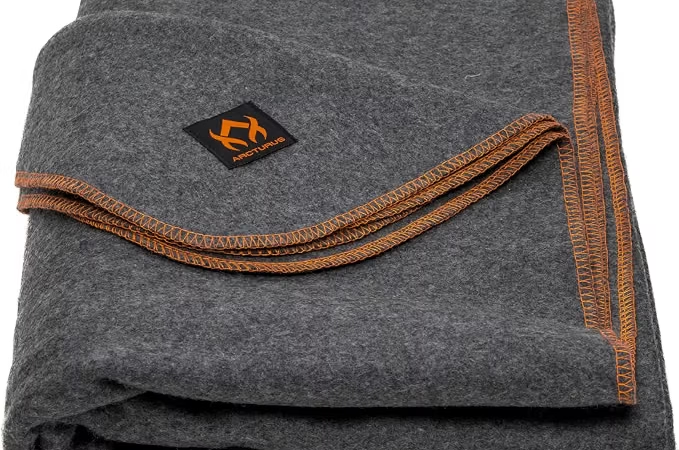
A dependable blanket can be useful in many situations beyond the bedroom. Camping trips, outdoor events, road travel, picnics, emergency kits, and cold-weather activities can all create situations where an additional layer of insulation is helpful. Wool blankets have long been used for this purpose because wool has natural insulating properties and can continue providing warmth even in conditions where moisture is present.
The Arcturus Military Wool Blanket is designed around that traditional role. It is a heavy wool blanket intended for outdoor and general-purpose use, with applications that include camping, stadium events, picnics, travel, vehicles, and preparedness kits. The product is also marketed toward bushcraft and survival-oriented setups.
Unlike lightweight fleece or compact synthetic travel blankets, a heavy wool blanket is generally intended to prioritize warmth, durability, and versatility over minimum packed size. That difference is important when deciding whether this type of blanket fits a particular use.
This guide takes a closer look at the Arcturus Military Wool Blanket, including its material characteristics, construction, potential outdoor applications, care requirements, storage considerations, and differences between wool and other common blanket categories.
The goal is not to present the blanket as a universal solution, but to explain where a heavy wool blanket can make practical sense and what users should consider before adding one to their camping gear, vehicle kit, or home supplies.
What Is the Arcturus Military Wool Blanket?
The Arcturus Military Wool Blanket is a heavy wool blanket designed for warmth and general-purpose use.
The product listing identifies it as a washable blanket intended for activities such as camping, outdoor events, picnics, travel, and vehicle or bushcraft kits.
Its military-style design reflects the traditional use of wool blankets in outdoor and field environments, where a material capable of providing insulation in cool conditions can be useful.
Wool behaves differently from materials such as polyester fleece or cotton. Rather than simply functioning as a soft layer, wool fibers naturally trap air, helping reduce heat loss. Wool can also absorb some moisture vapor while retaining useful insulating properties, which is one reason it has historically been used for outdoor clothing and blankets.
The blanket’s heavier construction makes it more suitable for situations where warmth and physical coverage are more important than carrying the smallest possible load.
That makes it relevant to several different types of users, from campers and travelers to people assembling practical vehicle or emergency kits.
Key Features
Heavy Wool Construction
The most important characteristic of this blanket is its wool construction.
Wool is a natural animal fiber with a structure that allows it to trap air between and around the fibers. This contributes to insulation by slowing the movement of heat away from the body.
For a blanket, that means wool can provide a substantial insulating layer without relying exclusively on synthetic filling.
The heavier construction also gives the blanket a different feel from lightweight travel blankets. It can be useful when a person wants substantial coverage during cold outdoor conditions.
However, heavier materials also have consequences. A wool blanket can take up more space and add more weight to a backpack or travel bag than a lightweight synthetic alternative.
This is one of the main trade-offs to understand before choosing this type of blanket.
Designed for Outdoor Use
The Arcturus blanket is marketed for outdoor activities including camping, picnics, stadium events, and travel.
Outdoor use places different demands on a blanket than normal indoor use.
A camping blanket may encounter grass, dirt, moisture, vehicle interiors, or rougher handling. A stadium blanket may spend several hours outdoors while someone remains seated. A picnic blanket may be exposed to the ground and changing weather.
Wool’s durability and insulating properties make it a natural candidate for these situations.
Still, a wool blanket should not be confused with waterproof outdoor equipment. Wool can handle some moisture better than certain natural fibers, but it is not a waterproof barrier.
A rain shell, tarp, groundsheet, or dedicated waterproof blanket may still be necessary when significant rain or wet ground is expected.
Washable Design
The blanket is designed to be washable, which is an important practical consideration for an outdoor-oriented textile.
Camping and travel blankets can accumulate dirt, smoke odors, food residue, grass, and other debris.
Being able to clean the blanket makes it easier to use repeatedly.
However, wool requires more care than many synthetic fabrics.
Temperature, agitation, detergent choice, and drying method can all affect wool. Users should follow the care instructions supplied with the specific blanket rather than treating it like a standard cotton or polyester blanket.
Improper washing can contribute to shrinkage, distortion, or changes in texture.
Large Coverage
A blanket intended for outdoor use needs enough surface area to provide useful body coverage.
A larger blanket can be used around the shoulders, across the legs, or wrapped around the body while sitting outside.
It can also be shared between two people in some situations, depending on the circumstances and desired coverage.
The useful coverage of a blanket is not determined solely by its dimensions, however. Thickness, layering, wind exposure, clothing, and activity level all influence how warm a person feels.
Natural Insulating Properties
One reason wool remains popular for cold-weather applications is its natural insulation.
Wool fibers have a three-dimensional structure that helps retain pockets of air.
Those air pockets contribute to insulation, while the fiber’s ability to absorb moisture vapor can help manage some humidity around the body.
This does not mean wool keeps a person warm regardless of conditions.
Wind, wetness, exposure time, body movement, clothing, and ambient temperature remain important.
A blanket is one component of a cold-weather system, not a substitute for appropriate clothing or shelter.
Suitable for Multiple Environments
A useful feature of a general-purpose blanket is that it does not have to be dedicated to one activity.
The same blanket can move between several roles.
For example, it can be stored in a vehicle during winter, taken on a camping trip during the weekend, and later used as a stadium or picnic blanket.
This multi-purpose approach can make a heavy wool blanket useful for people who prefer gear that serves more than one function.
How a Wool Blanket Helps With Cold Conditions
Understanding how wool works can help explain why heavy wool blankets remain useful despite the availability of modern synthetic materials.
Heat naturally moves from warmer areas toward cooler areas.
When a person is sitting outside in cold weather, the body continually loses heat to the surrounding environment.
A blanket creates an insulating layer between the body and the environment.
Wool contributes to this process by trapping air within its fibers. Since still air is a relatively poor conductor of heat, these trapped air spaces can slow heat transfer.
The blanket can therefore help reduce heat loss when wrapped around the body or placed over the legs.
The effectiveness of the blanket depends on how it is used.
A person sitting in a strong wind may lose heat more quickly than someone sitting in a sheltered location. In that situation, a wind-resistant outer layer can complement the blanket.
Similarly, sitting directly on cold ground can result in substantial heat loss through contact. A blanket placed underneath the body can provide some insulation, but a dedicated sleeping pad or ground mat is generally more appropriate when sleeping outdoors.
How the Arcturus Wool Blanket Can Be Used
Camping
Camping is one of the most obvious applications.
A wool blanket can provide an additional layer inside a tent, around a sleeping bag, or over the legs while sitting around camp.
It can also be useful during evening activities when temperatures drop after sunset.
The blanket should not replace a sleeping bag or sleeping system rated for the expected conditions. Instead, it can function as an additional layer.
For car camping, its weight and bulk are less significant because the blanket can be transported in a vehicle rather than carried for long distances.
Cold-Weather Road Trips
A heavy wool blanket can be a useful addition to a vehicle kit during colder months.
It can provide an extra insulating layer if a traveler needs to remain in a stationary vehicle for an extended period.
For example, unexpected delays, winter travel interruptions, or roadside situations can make additional insulation useful.
A blanket should be considered part of a broader vehicle preparedness kit rather than a standalone emergency solution.
Other useful supplies can include water, food, a flashlight, appropriate clothing, first-aid supplies, and communication equipment.
Stadium and Sporting Events
Outdoor sporting events can involve long periods of sitting without much physical activity.
Even when the air temperature does not seem extremely low, remaining seated for several hours can make cold conditions feel more uncomfortable.
A wool blanket can be placed over the legs or wrapped around the upper body.
This can be especially practical for spectators who expect to remain outdoors after sunset.
Before taking a blanket into a stadium, however, check the venue’s bag and blanket policies. Different facilities can have restrictions on the size or type of items guests can bring inside.
Picnics
A wool blanket can serve as both a ground covering and a source of warmth.
On cool days, it can make an outdoor picnic more comfortable by providing an additional insulating layer.
However, wool is not the same as a waterproof picnic mat.
If the ground is damp, a waterproof groundsheet underneath the wool blanket can help prevent moisture from transferring upward.
This layered approach can be particularly useful in changing weather.
Travel
Travelers can use a heavy blanket in cars, RVs, cabins, or other situations where luggage space is less restrictive.
The blanket can function as an additional comfort layer during road trips or while staying in places where temperatures vary.
For air travel, the blanket’s weight and bulk may be less convenient than a compact travel blanket.
That distinction is important: “travel blanket” can describe several very different designs.
A lightweight synthetic blanket is easier to fit into carry-on luggage, while a heavy wool blanket provides a more substantial layer but requires more packing space.
Home Emergency Kit
A wool blanket can also be stored as part of a household emergency kit.
Power outages during cold weather can make maintaining body warmth more difficult.
Having blankets available can provide an additional passive insulation layer while the household addresses the underlying problem.
For emergency preparedness, redundancy is valuable. Multiple blankets, warm clothing, safe heating practices, lighting, communication tools, and appropriate supplies are more useful than depending on one item.
Bushcraft and Outdoor Skills
People interested in bushcraft may use wool blankets as part of traditional outdoor gear.
A wool blanket can serve several roles around a campsite, including personal insulation and temporary coverage.
Wool’s resistance to rapid heat loss and its traditional association with outdoor field use make it particularly compatible with this type of equipment.
However, bushcraft use should not be interpreted as proof that the blanket can replace proper shelter or technical outdoor equipment.
Cold-weather camping requires preparation based on the actual environment.
Outdoor Photography and Events
Photographers, event staff, spectators, and others who spend extended periods outside may appreciate having a substantial insulating layer available.
Unlike a garment, a blanket can be removed and folded away when conditions become warmer.
This flexibility can be useful during long outdoor sessions when temperatures change throughout the day.
Using the Blanket Around a Campfire
Wool is often associated with fire-resistant outdoor materials, but that does not mean a wool blanket is fireproof.
This distinction is important.
Wool can behave differently from many synthetic fibers when exposed to heat, but it can still burn or become damaged under sufficient heat.
A blanket should therefore be kept at a safe distance from open flames, sparks, hot coals, camp stoves, heaters, and other high-temperature sources.
A campfire can also produce sparks that travel farther than expected.
If the blanket is being used around a fire, treat it as a normal textile and maintain appropriate clearance.
Never use a blanket as a substitute for a properly designed fire-resistant shelter or protective equipment.
Who the Arcturus Wool Blanket May Be Suitable For
Campers Who Prefer Traditional Materials
People who appreciate natural materials may find wool interesting because it has a long history in outdoor applications.
A heavy wool blanket can provide a different experience from modern synthetic camping blankets.
Car Campers
Car campers do not need to carry every item over long distances.
That makes the weight of a heavy blanket less significant.
A blanket can remain stored in the vehicle and be available whenever needed.
Outdoor Spectators
People attending football, soccer, baseball, motorsports, concerts, or other outdoor events can use a blanket as an additional layer during cold weather.
Road Travelers
A blanket can be useful as part of a vehicle travel kit, particularly in regions where winter conditions can become unpredictable.
Homeowners Building Emergency Supplies
People preparing household emergency supplies may prefer durable, reusable blankets rather than disposable emergency sheets.
A wool blanket can complement other emergency equipment.
Bushcraft Enthusiasts
Those interested in traditional outdoor techniques may appreciate the versatility of a substantial wool blanket.
It can become part of a broader collection of camping and outdoor equipment.
Important Things to Consider
Weight and Packability
One of the biggest trade-offs with a heavy wool blanket is portability.
Wool can provide substantial insulation, but that insulation comes with physical bulk.
If you are planning a long backpacking trip where every gram matters, a lightweight synthetic sleeping quilt or compact blanket may be more practical.
For car camping, picnics, stadium events, or vehicle storage, the weight may be less important.
Always consider how far the blanket needs to be carried before choosing it.
Wool Texture
Wool does not necessarily feel like fleece.
Some people enjoy the traditional texture of wool, while others prefer the softer surface of synthetic blankets.
This is partly a matter of personal preference.
If the blanket will be used directly against bare skin, clothing or a softer liner can provide another layer between the wool and the user.
Washing Requirements
Wool needs more careful maintenance than many synthetic materials.
Avoid assuming that any washing machine cycle is suitable.
Follow the product’s care label carefully.
Incorrect washing or drying can affect the blanket’s dimensions and texture.
Drying Time
A heavy wool blanket can take significantly longer to dry than a lightweight synthetic blanket.
This matters when camping.
If the blanket becomes wet during a trip, it may not dry quickly under cool or humid conditions.
A waterproof storage bag can help protect it during transport, but moisture should not be trapped against the fabric for extended periods.
Moisture Management
Wool can absorb moisture while still providing insulation, but it is not waterproof.
A wet wool blanket will still become heavier and less comfortable.
If rain is expected, use a waterproof outer layer or shelter rather than relying on the wool blanket itself to keep precipitation out.
Size and Storage
A heavy blanket requires suitable storage space.
At home, it can be folded and stored in a closet or gear container.
Inside a vehicle, make sure it does not obstruct visibility, pedals, airbags, or other safety equipment.
Avoid placing loose gear where it could become a hazard during sudden braking.
Outdoor Fire Safety
As mentioned earlier, wool should not be treated as fireproof.
Keep the blanket away from open flames, sparks, heaters, and hot surfaces.
This is particularly important when using it around a campfire.
Allergies and Sensitivities
Wool may not be comfortable for everyone.
People with wool sensitivities or certain skin sensitivities should consider whether they will be comfortable using the blanket directly against their skin.
A liner or clothing layer can sometimes improve comfort.
Wool Blanket vs Synthetic Fleece Blanket
Fleece blankets are usually made from synthetic fibers such as polyester.
They tend to be lightweight, soft, and easy to pack.
A wool blanket generally offers a different combination of weight, insulation, durability, and moisture behavior.
| Category | Wool Blanket | Synthetic Fleece Blanket |
|---|---|---|
| Material | Natural wool fiber | Usually polyester |
| Weight | Often heavier | Usually lighter |
| Texture | Traditional wool feel | Generally soft and smooth |
| Packability | More bulky | Often easier to compress |
| Moisture behavior | Can absorb moisture vapor | Generally low moisture absorption |
| Drying | Can take longer | Often dries relatively quickly |
| Outdoor use | Suitable for many general outdoor applications | Common for camping and travel |
| Maintenance | Requires careful washing | Often easier to machine wash |
| Long-term storage | Needs protection from pests and moisture | Generally easier to store |
Neither category is automatically appropriate for every situation.
The better choice depends on whether the user prioritizes weight, texture, maintenance, insulation, packability, and intended environment.
Wool Blanket vs Emergency Mylar Blanket
Emergency mylar blankets are designed around a completely different concept.
They are extremely lightweight and compact and are commonly used in emergency kits.
Their reflective construction is intended to reduce radiant heat loss when positioned appropriately.
A heavy wool blanket, by contrast, provides insulation through its material structure and thickness.
A mylar emergency blanket takes up very little space but does not provide the same physical coverage or traditional blanket feel.
For preparedness, the two can actually complement one another.
A household or vehicle emergency kit can contain a compact emergency blanket alongside a more substantial wool blanket.
Wool Blanket vs Sleeping Bag
A sleeping bag is designed specifically for sleeping outdoors.
Its shape helps retain warmth around the body, and sleeping bags are typically rated according to temperature ranges.
A rectangular wool blanket is much more versatile but generally does not provide the same enclosed sleeping configuration.
For serious cold-weather camping, a sleeping bag and appropriate sleeping pad should form the core sleeping system.
A wool blanket can then serve as an additional insulating layer.
This is particularly useful for car camping or situations where weight is not the main concern.
Caring for a Wool Blanket
Proper care can make a significant difference in the usable life of a wool blanket.
Follow the care label
The manufacturer’s instructions should always take priority over generic wool-washing advice.
Different wool fabrics can have different treatments and construction methods.
Avoid unnecessary washing
If the blanket is only lightly used, airing it out may sometimes be preferable to washing it immediately.
Wool fibers can naturally resist certain odors, although this does not mean the blanket never needs cleaning.
Keep it dry during storage
Before storing the blanket for a long period, make sure it is completely dry.
Moisture trapped in folded fabric can contribute to unpleasant odors and potentially damage the material.
Protect it from pests
Natural wool can attract certain fabric pests.
Long-term storage in a clean, dry, appropriately sealed container can help reduce exposure.
Avoid excessive heat
High heat can affect wool fibers and contribute to shrinkage or deformation.
Use the manufacturer’s recommended drying procedure.
Practical Storage Ideas
A blanket intended for outdoor use benefits from being stored somewhere accessible.
For a vehicle, consider keeping it inside a dedicated gear bag or storage compartment where it will remain clean and dry.
For home emergency supplies, place it with other cold-weather equipment rather than hiding it in a difficult-to-reach location.
For camping, a waterproof outer bag can protect the blanket from rain during transport.
Do not seal damp wool inside an airtight container for long-term storage.
Allow it to dry thoroughly first.
Frequently Asked Questions
Is the Arcturus Military Wool Blanket suitable for camping?
Yes, it is designed for applications that include camping and outdoor use.
It can function as an additional insulating layer around a campsite, inside a tent, or during evening activities.
It should not be considered a replacement for a properly rated sleeping bag or sleeping system when camping in very cold conditions.
Is it waterproof?
No. A wool blanket should not be treated as a waterproof barrier.
Wool can handle some moisture while retaining useful insulation, but rain and wet ground can still penetrate the material.
A waterproof shelter or groundsheet can provide additional protection.
Can it be used as a picnic blanket?
Yes. It can be used as a general-purpose outdoor blanket for picnics and similar activities.
If the ground is damp, placing a waterproof layer underneath can help keep moisture away from the wool.
Can it be used at a stadium?
A substantial blanket can be useful for outdoor sporting events and other spectator activities during cool weather.
Before attending, check the venue’s policies regarding blankets and other carried items.
Is wool warmer than fleece?
There is no universal answer based solely on material name.
Warmth depends on thickness, construction, air trapping, wind exposure, clothing, and how the blanket is used.
Wool and fleece can both provide useful insulation, but they have different weight, texture, moisture, and care characteristics.
Is the blanket suitable for winter camping?
It can be used as part of a winter camping setup, but a blanket alone should not determine whether a person is adequately protected from cold.
Winter camping requires equipment selected for the expected temperature, wind, precipitation, ground conditions, and duration.
A properly rated sleeping bag, sleeping pad, shelter, and suitable clothing remain important.
Can it be used around a campfire?
It can be used in a campsite environment, but it should be kept at a safe distance from flames and sparks.
Wool is not fireproof, and sparks or high temperatures can still damage or ignite textiles.
Can the blanket be washed?
The product is described as washable.
However, wool requires appropriate care. Follow the manufacturer’s care instructions regarding washing temperature, detergent, agitation, and drying.
Does wool absorb water?
Wool can absorb moisture within its fibers while maintaining some insulating capability.
That does not make it waterproof.
A soaked wool blanket can become heavy and uncomfortable, so protection from heavy rain is still important.
Is a wool blanket suitable for a car emergency kit?
Yes. Its substantial insulation can make it a useful addition to a vehicle preparedness kit.
It should be combined with other appropriate supplies rather than treated as the only emergency resource.
Is it good for backpacking?
That depends on the type of backpacking.
The heavier construction of a military-style wool blanket can make it less convenient for long-distance trips where reducing pack weight is a priority.
For car camping or short-distance outdoor trips, its weight may be less of a concern.
Can two people share the blanket?
A sufficiently large blanket can provide shared coverage, depending on how the people are positioned and the environmental conditions.
For two people in genuinely cold conditions, however, individual insulating layers can provide more flexibility.
Can it replace a sleeping bag?
A blanket and sleeping bag serve different purposes.
A wool blanket can supplement a sleeping bag, but it should not automatically be considered an equivalent replacement for a sleeping bag designed and rated for cold-weather conditions.
Does wool shrink?
Wool can shrink or change shape when exposed to inappropriate washing, agitation, or high heat.
Following the manufacturer’s care instructions is therefore important.
Does wool have a strong smell?
Natural wool can have a characteristic textile or lanolin-like smell, particularly when new.
Odor perception varies between individuals, and proper airing and care can help manage normal textile odors.
Can the blanket be stored in a vehicle all year?
It can be stored in a vehicle, but long-term storage should account for heat, moisture, dirt, and pests.
Keep it clean and dry and inspect it periodically.
If the vehicle experiences extreme temperatures, storing sensitive gear elsewhere may be preferable when practical.
Is it suitable for outdoor survival kits?
It can be included in a broader outdoor preparedness kit.
A wool blanket provides a substantial insulating layer, but a complete survival or emergency kit should include other appropriate equipment based on the environment and expected risks.
What makes wool useful for outdoor blankets?
Wool naturally traps air within its fiber structure and can retain useful insulation when it encounters some moisture.
It is also a durable natural textile that has historically been used for outdoor clothing and blankets.
Its disadvantages include weight, bulk, and more demanding care compared with many synthetic fabrics.
Conclusion
The Arcturus Military Wool Blanket is a substantial outdoor-oriented blanket designed around the traditional insulating properties of wool.
Its potential applications extend beyond simple home use. Camping, road trips, outdoor sporting events, picnics, vehicle preparedness, bushcraft activities, and household emergency supplies are all situations where a durable insulating blanket can be useful.
The main characteristic to understand is the balance between insulation and portability. A heavy wool blanket can provide substantial coverage and a traditional outdoor material, but it is not as compact or lightweight as many modern synthetic alternatives.
That difference matters depending on how the blanket will be transported.
For car camping or vehicle storage, the additional weight may be relatively easy to accommodate. For long-distance backpacking, a lighter alternative may make more sense.
Wool also requires thoughtful care. Following the manufacturer’s washing instructions, keeping the blanket dry during long-term storage, and protecting it from pests can help maintain the material. When used outdoors, it should also be protected from prolonged rain and kept safely away from open flames and hot surfaces.
The blanket is best understood as a versatile insulation layer rather than a complete outdoor survival system. In colder environments, it should complement appropriate clothing, shelter, sleeping equipment, and other safety gear.
For people looking for a reusable wool blanket that can move between camping trips, outdoor events, travel, vehicle kits, and household preparedness, understanding these practical differences can help determine whether a heavy wool blanket fits their particular needs.